Livestock Marketing: Sell – Buy Trading As An Alternative To The Feedlot Price-Maker Market
The Livestock Marketing Course fee is R2000. Herdscape Courses are an online programme designed for farmers, farm managers, advisors and students who want to transition from conventional, input-heavy farming to a profitable, cashflow-rich, regenerative, ecology-centered approach. Instead of focusing solely on production outputs, the courses teach participants how to restore and steward the natural systems and how to market their livestock in a way that underpins profitable agriculture — soil biology, water cycles, nutrient flow, biodiversity, soil and veld health and Sell-Buy marketing. Livestock are reframed as tools to regenerate landscapes, improve soil function and build long-term resilience, they are not merely units of production with which producers speculate on profitability. Why do all that work and then speculate that you will make a profit on the sale of your weaners months from the day you put your bulls (or rams) in? Read more below …
Unlock Your Farm's Regenerative and Profit Potential - What To Expect.
The HERDSCAPE courses are your catalyst for a profound shift – moving you decisively from your current challenges towards a future where your farm's resource base is actively regenerating, building resilience, biodiversity and an enduring profitability.
Knowing about Sell-Buy livestock trading gives you an "unfair" advantage. The opportunity in front of you is not simply to sell an animal; it is to make a decision based on today’s known market price rather than gamble on what the price might be months from now when the animal is “ready” to sell, or when it has to be sold. If you hold the animal, you carry all the risk: market prices may fall, conditions may change, grazing may deteriorate, costs may rise, or the animal may not perform as expected. By selling now, you are working with an actual price that is already available to you, not a forecast or a hope. That turns the decision from speculation into a measured trade.
A sell-buy trade also creates cashflow immediately. The sale puts money into the business at once, instead of leaving value tied up in an animal while you wait for a future sale date and an uncertain future price. That cash can be used deliberately: to buy the replacement animal, strengthen working capital, reduce pressure on other resources, or keep options open. In that sense, the sale is not just an exit; it is a way of releasing capital and putting it back to work.
Selling now does not mean leaving a gap on the farm. If a suitable animal is available to buy immediately, it can replace the sold animal on the same market. You do not have to wait for the breeding cycle to produce a replacement, nor do you have to carry the time, fertility, calving, rearing, and growth risks that come with waiting for your own herd to generate that animal. The bought animal starts converting available grazing into weight the moment its hooves hit the ground.
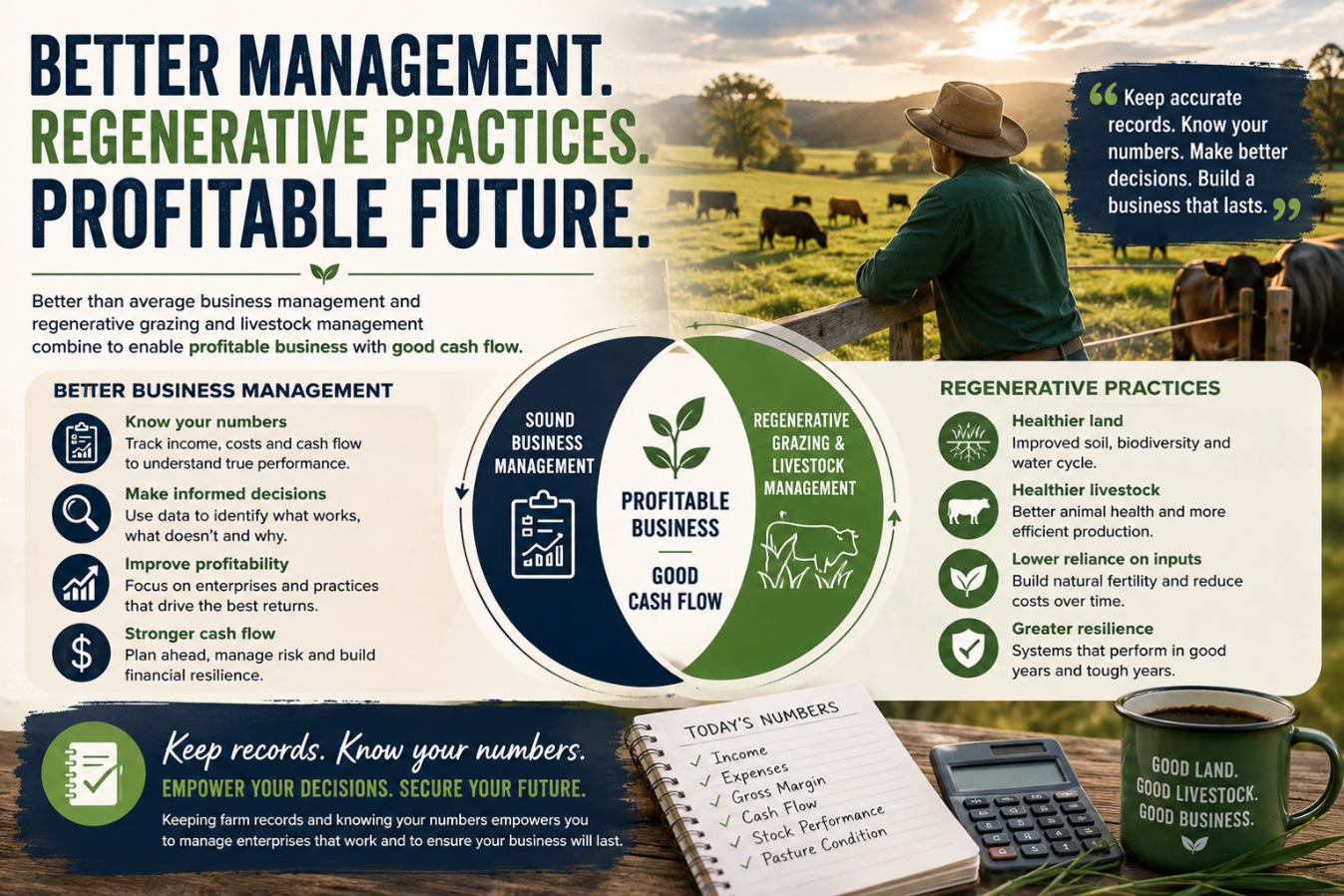
The strength of the trade lies in your own records. You know what it costs, on your farm and under your conditions, to put on one kilogram of gain. You also know how much grazing you have available, how long you can carry the animal, and how much cash you can responsibly commit. With those figures, you can calculate the cost of taking the bought animal up to the weight of the animal you sold. If the current price difference between the sold animal and the bought animal is greater than your expected cost of gain, then the trade already contains a margin.
You can forget what you paid for the buy animal the minute you buy it. What you paid is no longer relevant. You simply scan now for the next trading opportunity.
In practical terms, you are buying weight that you can produce cheaper than the market is currently paying for it. That means the profit is not dependent only on guessing where the market will be later; it is created by knowing your production cost and using today’s price relationship. The animal may still have to grow, and the market may still move, but the decision is grounded in a known spread, known resources, and known cost of gain.
This approach keeps the farm stocked, keeps grass working and keeps money circulating through the business. Instead of waiting passively for an animal to become sale-ready and hoping the future price rewards that wait, you can turn animals over when the numbers make sense, replace them immediately, and use your own production records to decide whether the replacement can be carried profitably. The focus shifts from predicting the market to managing margin, cashflow, grazing, and risk.
Related products


 English
 Afrikaans