More Productive Veld Starts with Better Water and Better Rotation
A good livestock year should do more than improve the bank balance — it should strengthen the veld base that carries the business through the next drought. Before buying more stock, building another shed or upgrading vehicles and machinery, ask one question: will this investment help the veld carry the farm better next year?
It does not often happen in farming that a season gives producers a clear opportunity to pause, review and reset. For many livestock producers, 2026 is one of those moments. After several difficult years, this is a good time to assess not only how well your business has performed, but whether the farm is better positioned to produce more from the same veld in the years ahead.
How have you weathered the effects of the 2024 drought, the period of low livestock prices and the disruption caused by foot–and–mouth disease challenges? The answer to those questions says a great deal about the resilience of your farming system, about your cash flow and about your veld base.
Livestock Prices and Your “Veld Engine”
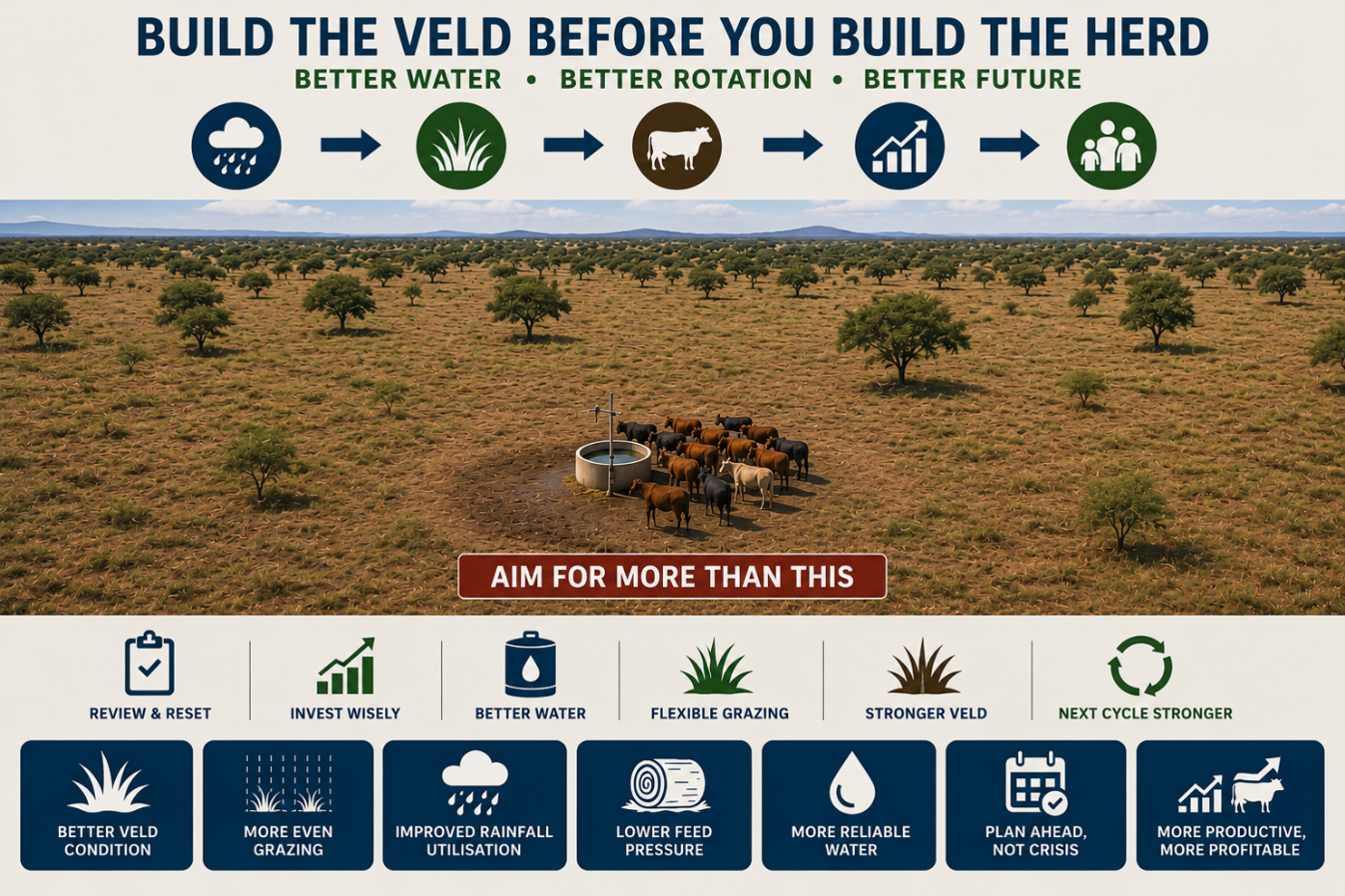
Livestock prices have been trending upward. That provides welcome relief, but it also creates a decision point. Will the extra income simply repair the balance sheet, or will part of it be reinvested into assets that permanently improve the productive capacity of the farm? The 2025–26 production year should be judged not only by profit, but by whether it has strengthened the business for the next production cycle.
Are you positioned to perform even better in the 2026–27 production year? How will you measure that improvement? A stronger farming business should be able to point to practical indicators: better veld condition, more even grazing, improved utilisation of rainfall, lower supplementary feed pressure, more reliable water and a grazing plan that can be adjusted before a problem becomes a crisis.
If you are having a good year and are looking for a tax-deductible investment in income–generating assets, the priority should be on development that improves the “veld engine” of the business. In practical terms, the strongest evidence points to two areas for development that work together: better stock water and more flexible grazing infrastructure. These investments help in an El Niño-type drought year, but their real value is that they raise the farm’s long-term ability to convert rainfall into grazing and animal production.
- Stock water sources, storage and distribution that allow animals to use the whole farm more evenly. The amount of water you can access determines the number of livestock you can carry. Use what you have wisely, that is the key.
- Grazing infrastructure that creates flexibility and options for more camps, grazing “swathes” or “lanes”, so that grazing pressure and rest periods can be managed with greater precision.
Prioritise Development That Improves the Veld
The most important farm developments are not always the most visible ones. A new handling facility, shed or vehicle may be useful, but they do not increase the carrying capacity of the veld. By contrast, water and grazing layout directly influence how and where animals graze, how long plants are exposed to grazing pressure and how much recovery time the veld receives before the next grazing event.
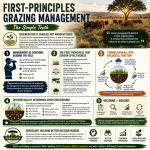
South African veld management guidance consistently emphasises veld condition assessment, stocking rate, grazing capacity and fodder-flow planning as core tools for livestock production under variable rainfall. Rotational grazing, camp subdivision and reliable water access are practical ways to turn those principles into daily management decisions.
Farmers who want to apply these principles to their own land and livestock can explore
Herdscape’s online regenerative grazing and livestock management course.
Why Water Comes First
Livestock do not graze evenly over the whole camp. They graze the areas they can reach comfortably before they have to go back to drink water. They can walk long distances to water if they have to, no doubt, but if that limits your potential is that what you want?
Particular attention should be paid to the placement, reliability and capacity of water points, including bulk water supply, supplementary storage and troughs. In practice, however, stock-water decisions are often driven by the desire to limit capital expenditure on infrastructure. This will amount to trying to “starve” effectiveness into the water system: reducing the number, position or capacity of water points in the hope that the livestock will simply adapt.
They will adapt (they have to) and animals can walk considerable distances to water but the development of the grazing system capacity pays the price when water is too far away. Research shows that, for optimum veld utilisation, the furthest livestock should walk to water is about 275 m. Utilisation falls off markedly beyond 350 m from water, or beyond 700 m between water points.
The primary objective should not be simply to provide water somewhere in the camp, but to provide it within a comfortable walking distance so that animals use the grazing area evenly, are enabled to turn grazing into a product for sale and to return nutrients evenly across the veld rather than concentrating them around a few watering points.
Landefeld and Bettinger (2003) highlight the significant role livestock play in nutrient cycling. A grazing cow returns approximately 79% of the nitrogen (N), 66% of the phosphorus (P) and 92% of the potassium (K) consumed back to the land (Bartlett, 1996). Where water was available within 330 m soil test levels of P and K remained evenly distributed across the veld and nutrient deposition closely matched the animals’ grazing patterns. Where the distance to water was greater than this soil test levels showed significant nutrient accumulation closer to the water source. This uneven distribution in camps where distance to water exceeds 350 m creates areas of nutrient overload near the water and nutrient depletion farther away, reducing veld productivity.
Many factors must be considered. Water quality affects both water and dry matter intake and open water sources may increase exposure to health risks such as liver fluke. Daily water demand varies with class of stock, temperature, diet and production status. Trough design must account for rim space, storage volume, inflow rate and the number of animals likely to drink at once.
If the water source is more than 300 m away, cattle tend to travel back in groups to drink, which can create pressure at the trough when flow rate is limited. Where animals do not have to walk too far it is unlikely that more than 15% of the mob will drink at the same time. The amount of trough rim space can be based on a practical guideline to allow 0.7 – 1 metre of rim space per LSU drinking. As a practical guide, the flow rate at the trough should be about 8 litres per minute, for each LSU drinking, at the furthest camp or water point from the water source. Trough volume and recovery rate must be sufficient to meet peak demand.
Your own experience, observations and stage of development will assist you to refine these guidelines to suit. Resist unsubstantiated claims of what is adequate, or guesstimates of what will do, when planning water for livestock for the longer term. The beneficial effects of having the right amount and quality of water available in the camp in the right place are compounded way beyond just ensuring the animals have enough to eat and drink.
LDPE pipe will last for a very long time, allow for increases in grazing capacity and stocking rate by a factor of three. If you need 100 litres per minute now then plan for pipe that will deliver 300 litres a minute. Pumps, storage and troughs can be upgraded as required, in future. Avoid having to install piping more than once in your lifetime.
The details do matter, but they should not obscure the central design principle: water infrastructure must support grazing management, not constrain it. In a regenerative livestock enterprise, a camp equivalent to an area of radius 350 m is approximately 40 ha in area and could contain nearly 800 LSU at a relatively low stock density of 20 LSU per ha (9 000 kg live mass/ha).
You must decide on how much to invest but under-investing in water can quickly undermine grazing distribution, animal performance, nutrient cycling and productive capacity and the profitability and resilience of your livestock enterprise in future. It will still work but the best opportunities will be lost.
Why More Camps Create More Options
A large camp gives limited choices: graze it, rest it, or compromise. More camps, or grazing plots, accommodate more options; they allow you to match grazing pressure to veld condition, rainfall, growth stage and livestock demand. They also make it possible to protect recovering veld, use strong veld at the right time and avoid returning animals too soon to plants that have not yet rebuilt root reserves and veld composition.
The purpose of subdivision is not simply to build more fences. In fact, building “walls of wire” is to be avoided. Grazing lanes using existing permanent fences (as far as possible) and temporary electric fences, can be set up to allow for an almost infinite number of grazing areas, tailored to the requirements of your livestock on any particular day. The purpose is to promote flexibility in allowing livestock to be concentrated for short graze periods and then to be moved on. The more grazing areas you have access to the more rest, recovery and regeneration of the veld.
The width of a laneway corresponds to the distance to water, a compromise of 350 m or less. The size of the plot being grazed today depends on the number of animals and forage demand. Two laneways running side by side, with pipelines, water points/moveable troughs and existing permanent fencing along the centre is a good solution.
A Practical Order of Investment
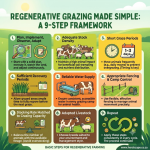
- Assess veld condition in your best veld, develop that first.
- Map existing water, weak points, storage risk and distances animals travel to drink.
- Upgrade water supply before adding fences.
- Subdivide large camps into practical grazing units, using permanent fencing where necessary and flexible/mobile, temporary fencing wherever possible.
- Design infrastructure so animals can move easily to handling facilities and between lanes or camps. Plan so that long periods of veld rest and recovery can be accommodated.
- Set a grazing plan for the year ahead with clear rest and recovery periods. Monitor outcomes and adapt whenever necessary.
Carrying Capacity is Earned, Not Assumed
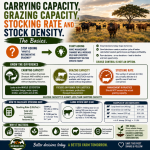
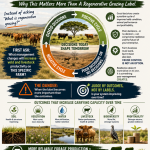
Carrying capacity is often spoken about as if it is a fixed number attached to a farm. In reality, it changes with rainfall, veld condition and management. A farm with poor water distribution and large inflexible camps will have less potential to progressively improve the condition of its grazing base than a farm with reliable water, planned rotation and enough camps to rest veld properly.
The objective should therefore not be to chase a higher stocking rate immediately. The objective should be to improve the biological veld factory first. Higher carrying capacity is the result of that improvement, not the starting point.
Measure the Return in Veld, Not Only in Rands
The return on these investments should be measured over several seasons. Monitor veld and animals (there are many useful indicators) and keep records of rainfall and the number of days grazed in each camp. Keep records of the number of animals in your mobs and analyse the balance between stocking rate and rain-based carrying capacity regularly. Develop your own carrying capacity benchmark for your own farm. These measures show whether or not your developments are genuinely increasing the productive capacity of the farm.
The central point is simple: if the farm has a good year, prioritise part of that strength to build a better veld system. Stock water and flexible grazing infrastructure are not luxury developments. They are foundational investments that allow better decisions, more resilient veld, a higher carrying capacity per unit of rainfall and a significant return on investment.
If you are ready to move from understanding to application,
explore the Herdscape online course in regenerative grazing and livestock management
Read more about Veld and Grazing Management Options:
- From Set Stocking to Regenerative Grazing: Management Changes the Equation
- Farm Records: Five Numbers That Matter
- Profitable Farming Is A Moving Target. Only A Few Will See When It Moves.
- The Discipline of Regenerative Grazing and Livestock Management: Precision in Execution
- Set-Stocking vs Rotational Grazing: An Honest Comparison



 English
 Afrikaans