Conventional livestock farming links inputs to production. Its predictability can appeal to banks considering finance, but it depends on continued access to essential inputs and services. Suppliers and service providers influence production costs, while others in the value chain capture a share of the value generated on farm, meaning less for the farmer.
Conventional farming is not a single level of intensity. It spans a range of systems, from extensive to intensive. A livestock farmer can choose to operate conventionally without farming at high intensity. The important distinction, however, is whether the chosen level of inputs forms part of a coherent production system that the farmer has the resources and ability to manage.
This raises a critical question: what happens when a farmer reduces input costs without adopting an alternative system? Lower expenditure is not, by itself, evidence of a viable change in farming approach. The decision must account for the production system that remains, its continuing requirements and the medium- to long-term consequences of withholding inputs and investment.
The issue is not whether low-input conventional livestock farming is inappropriate, but whether it is deliberately designed and adequately supported. There is a point at which reducing inputs ceases to be a managed choice about farming intensity and begins to undermine the enterprise itself.
Without a workable alternative, approaching an “input zero” position risks becoming managed liquidation rather than a transition to another farming system.
Cost Retrenchment, Cutting Inputs And Halting Capital Reinvestment, Is Not A Transition.
A transition requires a clear alternative and a deliberate plan for how the livestock enterprise will function under changed conditions. Arbitrarily cutting inputs and halting capital reinvestment does not establish that alternative; it leaves the existing system in place while reducing the resources available to sustain it.
This amounts to a trade-off between short-term financial survival and long-term systemic collapse. Reducing inputs might temporarily reduce operating costs but failing to rebuild soil biology or maintain infrastructure creates a compounding deficit in productivity, asset value and climate resilience.
Ultimately, this strategy acts as a slow-motion exit from agriculture. It treats the farm as a depletable resource to be mined for cash rather than a living system or a business requiring continuous reinvestment.
The farmer must distinguish between removing unnecessary expenditure and withholding inputs or reinvestment on which the chosen system depends. Unless these decisions are matched to a viable farming approach and the capacity to manage it, short-term savings will come at the expense of the farm’s medium- to long-term future.
Farmers who want to apply these principles to their own land and livestock can explore
Herdscape’s online regenerative grazing and livestock management course.
What Are The Characteristics Of A Successful Transition?
The “ideal” alternative to conventional farming would not simply maximise one objective, such as yield, biodiversity, animal welfare or profitability. It would optimise several outcomes simultaneously. The list of desirable characteristics would include high productivity, reliable income and climate resilience.
It would minimise synthetic fertilisers and pesticides, maximise nutrient cycling, use water efficiently, minimise waste and produce nutritious, affordable food. The farmer would manage for veld and animal productivity but also manage for both economic and ecological regeneration.
When management efficiency limits flexibility
The traditional or conventional grazing paradigm has gradually optimised farms for management efficiency under a relatively stable set of assumptions. Camps became larger and fewer, water points were fixed, labour was minimised and livestock movements were designed around convenience and cost. The system functions well if the objective is to simplify management. The landscape and climate are not static, however, so farms have become highly efficient at implementing a particular management strategy while becoming increasingly inflexible when conditions change.
As a result, livestock have been left to optimise their own immediate needs within a constrained environment. They repeatedly select the same preferred areas, species and habitats. They cannot easily be directed to perform ecological work. Instead of using animal behaviour as a management tool, management largely relinquishes control to the preferences of the animal.
Why regeneration demands a different approach
The challenge with a regenerative management alternative is that it requires the opposite. Success depends on increasing management flexibility. Livestock must be moved according to ecological need rather than convenience. Recovery periods must vary. Stock density must be variable. Grazing plans must evolve in response to rainfall, plant growth, soil condition and market realities.
This leads to the perception that management for regeneration is expensive and unrealistic. Producers correctly recognise that they cannot simply adopt a new grazing plan because they are constrained by infrastructure, finances, habits, labour availability and risk tolerance. The reality is that ecological feedback may take a year or more to become visible.
Changing the conditions that shape decisions
The critical issue is that producers are often constrained less by their willingness to regenerate the land than by the infrastructure, capital, and management systems that determine what they can realistically do.
Conventional grazing systems tend to organise land, livestock, water, fencing and labour around predictable routines and ease of management. Over time, these arrangements can create a path dependency: the farm becomes efficient at operating within its existing model but less capable of responding flexibly to variable rainfall, changing forage availability, ecological recovery needs and market conditions.
One would argue that the critical constraint is not grazing management, fencing, water points, genetics, or even capital. Those are all important, but they are secondary constraints. A successful transition to managing for regeneration requires more than changing grazing practices. It requires changing the conditions that enable producers to make decisions, manage risk and respond rapidly enough to ecological feedback.
Turning uncertainty into confidence
A more precise description may then be that the transition involves moving from a system optimised for “control through simplification” to a system capable of adaptation through flexibility. Nature is dynamic. Regeneration therefore requires a management approach that is also dynamic. The ultimate constraint is neither money nor infrastructure but the ability of the farm and its manager to adapt faster than environmental conditions change.
Conventional systems are limited by ecological degradation, transitions to managing for regeneration are limited by management adaptability. The producer’s capacity to learn, experiment, observe and adjust may be the single most important factor determining whether regeneration remains an aspiration or becomes reality.
Farmers need a pathway that steadily converts uncertainty into confidence. Once confidence is gained, they will often find ways to overcome labour, infrastructure and capital limitations that previously appeared insurmountable.
What Will Facilitate A Transition To “Management For Regeneration”?
The five factors below provide a framework for an effective transition. They should be understood as enabling conditions, not guarantees of ecological improvement or financial success. Their value lies in making change more manageable, evidence more useful and commitment better informed.
Reducing the cost of experimentation. A transition that requires substantial upfront investment or an immediate whole-farm commitment may be unattractive, even when its longer-term aims are compelling. Management for regeneration becomes more approachable when it can be explored through small, bounded experiments. The appropriate scale depends on local conditions, available labour, animal welfare and the consequences of getting the decision wrong; a small trial is not automatically a low-risk trial.
Shortening feedback loops. Ecological responses can be slow, variable and difficult to interpret. Shortening feedback loops does not mean expecting the landscape to regenerate quickly. It means reducing the time between a management decision, a useful observation and an appropriate adjustment. Monitoring should be simple enough to sustain.
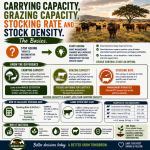
Carrying capacity should be treated as a longer-term assessment, not inferred from a brief increase in available forage. Input reduction is useful only when considered alongside production, costs and risk.
Building management capacity. Regenerative agriculture is often presented as a grazing system. A more useful framing is management directed towards regenerative outcomes. Grazing is one tool; the essential capability is to select and adapt tools to the landscape, the enterprise and the people who must do the work.
The opportunity for regeneration may be present before the manager feels equipped to pursue it. The response should be to build capability alongside the transition, rather than allowing either enthusiasm or uncertainty to dictate its pace.
Increasing operational flexibility. Start with the operational bottleneck rather than a shopping list. Is the constraint water access, the time needed to move animals, handling difficulty or an inability to give an area adequate recovery? Invest where a change will remove the constraint and test the simplest workable option before committing to a more elaborate system.
Infrastructure should be assessed not only as a production asset, but also as an adaptive-capacity asset. The question is not simply how much output an investment might support, but which management options it makes possible when conditions change.
Herdscape: Making the transition workable
Herdscape’s role is to help producers turn the intention to manage for regeneration into a workable process of learning, planning and adjustment. The aim is not to prescribe a fixed grazing system or encourage input reduction for its own sake. It is to support decisions that connect ecological objectives with production requirements, business viability and the practical capacity of the people doing the work.
Working alongside producers on farm. We are actively seeking opportunities to work on farm with producers committed to making the transition. Our intention is to bring the courses, planning, monitoring and adaptive support into the setting where decisions are made and their consequences become visible. Working alongside producers would allow us to test the practicality of the approach together, identify obstacles as they arise and refine support in response to actual operating conditions. This is an invitation to collaborative learning, not a promise of a predetermined outcome. Please enquire.
Establishing a shared foundation. Courses on the fundamental principles of both the production and business aspects of the regenerative paradigm provide a foundation for examining how the farm functions, what the producer wants to achieve and which assumptions need to be tested. Production and business decisions need to be considered together: a proposed change must make sense for the land and livestock, but also for cash flow, costs and the resources required to sustain the enterprise.
Turning principles into a practical plan. Planning sessions help producers translate these principles into decisions suited to their own circumstances. A useful starting point is one priority outcome, one manageable experiment and a clear account of the resources and constraints involved. The plan should establish what will change, what must remain protected and what evidence will inform the next decision. Its purpose is to make the next step manageable, not to commit the producer prematurely to a whole-farm transformation.
Making monitoring useful for decisions. There is guidance on the critical aspects of monitoring and recording outcomes. The emphasis is on observations that answer practical questions, rather than collecting information without a clear purpose. Producers need a starting point against which to assess change, records of the actions taken and enough context to interpret the outcomes. Ecological observations should be considered alongside animal performance and business results, so that an apparent improvement in one area is not mistaken for progress across the enterprise. Monitoring must also be simple enough to maintain within the farm’s everyday workload.
Supporting adaptive responses. We support producers in using these observations to decide what to continue, adjust, pause or stop. A plan is a working proposition, not a commitment to persist regardless of the evidence. The task is to distinguish between a practice that needs more time, a decision that needs modification and a constraint that requires attention. This keeps learning connected to action while recognising that short-term observations do not, on their own, establish lasting ecological improvement or financial success.
A workable transition therefore combines a clear direction with room to change course. Herdscape’s contribution is to help producers build the understanding, evidence and decision-making confidence to take the next appropriate step, while keeping the farm’s ecological objectives and business viability in view.
Part 3 to follow …. What is necessary to facilitate the shift to regeneration?
If you are ready to move from understanding to application,
explore the Herdscape online course in regenerative grazing and livestock management
Read more about Veld and Grazing Management Options:





 English
 Afrikaans